











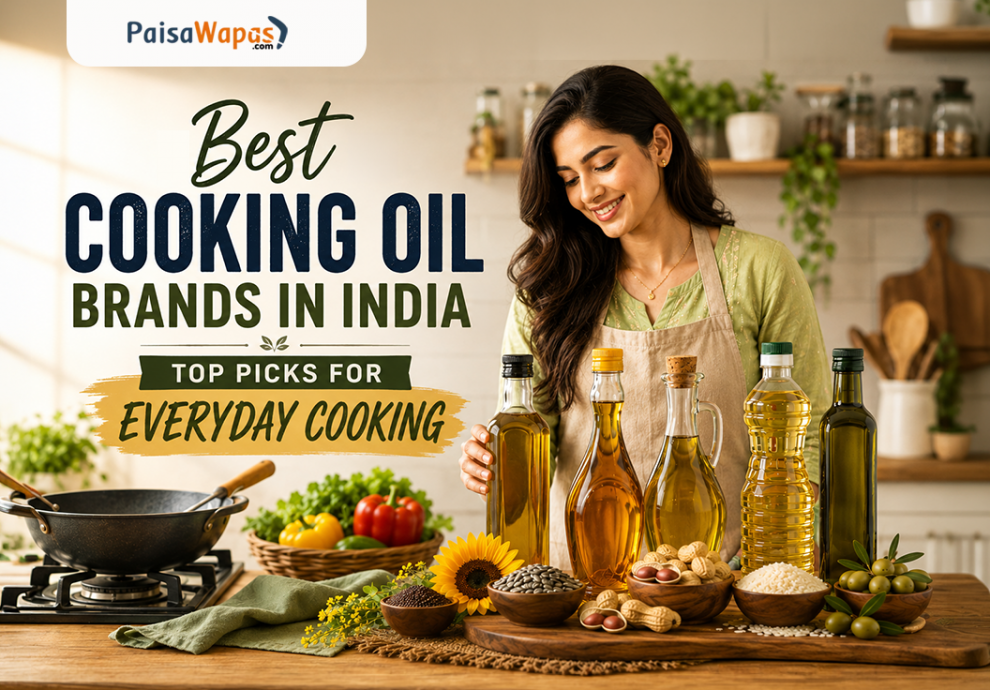

Choosing the best cooking oil in India isn’t only about picking the brand with the biggest advertisement or the word “healthy” on the pack. The right choice depends on the type of oil, cooking method, taste, price, and your overall diet. Sunflower, rice bran, groundnut, mustard and soybean oils are all commonly used in Indian kitchens, and different regions have traditionally preferred different oils. For most households, a good cooking oil is one that fits the family’s cooking style, comes from a reliable manufacturer, has clear labelling, and is used in sensible quantities.
Quick Answer: Which Are the Best Cooking Oil Brands in India?
Some of the leading cooking oil brands worth considering in India include Fortune, Saffola, Dhara, Freedom and Emami Healthy & Tasty. They offer different varieties such as sunflower, rice bran, groundnut, mustard and soybean oils. The best option for you depends on whether you prioritise everyday cooking, traditional flavour, a neutral taste, or a particular oil type.
| Cooking Oil Brand | Popular oil varieties | Best suited for | Shop Now |
| Fortune | Sunflower, rice bran, groundnut, mustard, soybean | Everyday cooking and variety | |
| Saffola | Multi-source oils, cold-pressed oils | Health-conscious households | |
| Dhara | Mustard, rice bran, groundnut and other edible oils | Traditional and everyday cooking | |
| Freedom | Sunflower, rice bran, mustard, groundnut | Regular Indian cooking | |
| Emami Healthy & Tasty | Soybean, rice bran, sunflower, mustard | Everyday family cooking |
The ranking above is a practical editorial comparison, not an official market ranking. Product availability can also vary by city and retailer.
Top 5 Cooking Oil Brands in India
1. Fortune
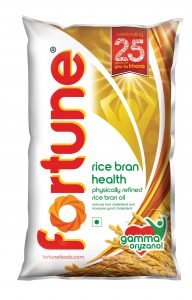

Fortune is one of the most recognisable edible oil brands in India. Its current portfolio includes refined groundnut oil, filtered groundnut oil, mustard oil, rice bran oil, sunflower oil, soybean oil and cottonseed oil.
That variety is one of Fortune’s biggest advantages. A household can choose a neutral-tasting sunflower or rice bran oil for regular cooking, or pick mustard or groundnut oil when stronger flavour is preferred.
Best for: Families looking for multiple cooking oil options under one brand.
Pros
- Wide range of edible oils
- Several options for Indian cooking styles
- Includes both refined and filtered options
- Easy to find across many retail channels
Consider: Don’t select a Fortune oil simply because it is the same brand you normally buy. Compare the specific oil type and nutrition label on the pack.
2. Saffola
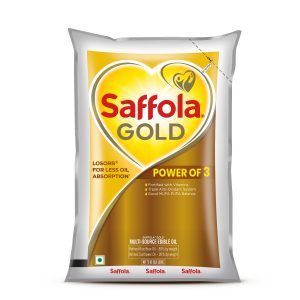
Saffola is particularly well known for its positioning around healthier eating and edible oils. Marico’s FY2024-25 annual report says Saffola offers four multi-source edible oil variants: Total, Gold, Active and Tasty+.
The brand has also expanded into cold-pressed oils. In 2025, Marico announced Saffola Cold Pressed Oils in single-seed and dual-seed varieties, including groundnut, sesame, mustard and combinations such as groundnut and sesame.
Best for: Consumers who want a broad range of mainstream and newer oil formats.
Pros
- Strong focus on edible oils
- Multi-source oil options
- Cold-pressed range available
- Several choices for different preferences
Consider: “Heart healthy” or similar marketing language should not replace checking the actual nutrition information and controlling total oil consumption.
3. Dhara
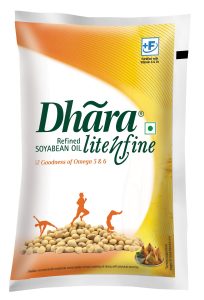
Dhara is a long-established edible oil brand associated with Mother Dairy. Its current product information includes Kachi Ghani Mustard Oil, rice bran oil and refined groundnut oil, among other products.
Dhara can be particularly useful for shoppers who prefer traditional Indian oils. Mustard oil, for example, has a distinctive flavour and is widely used in North and East Indian cooking.
Best for: Traditional Indian cooking and households that prefer mustard or groundnut oil.
Pros
- Familiar Indian edible oil brand
- Traditional oil options
- Groundnut and rice bran choices
- Suitable for different regional cooking styles
Consider: Mustard and groundnut oils have noticeably different flavours, so the choice should match the dishes you regularly prepare.
4. Freedom
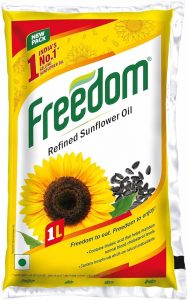
Freedom Healthy Cooking Oils, from Gemini Edibles & Fats India, currently offers sunflower, rice bran, mustard and groundnut oils. Its official website also lists these varieties for everyday Indian cooking.
The brand has particularly strong roots in southern India. Its current website cites NielsenIQ data for a No. 1 position in the sunflower oil segment based on MAT February 2026 data for the specified retail category. That is a brand-reported market claim and should not be interpreted as saying Freedom is the best cooking oil for every household.
Best for: Regular cooking, especially for shoppers looking for sunflower, rice bran, mustard or groundnut oil.
Pros
- Multiple mainstream oil varieties
- Strong presence in South India
- Sunflower oil is a major product
- Rice bran, mustard and groundnut options available
Consider: Some of the brand’s strongest distribution and market presence is regional, so availability can differ between states.
5. Emami Healthy & Tasty
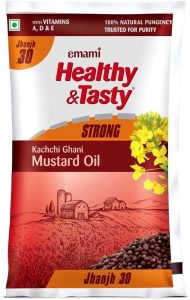
Emami Healthy & Tasty offers a broad range of edible oils. Its current product portfolio includes refined soybean, rice bran, sunflower and vegetable oils, along with Kachchi Ghani mustard oil in Regular, Strong and Super Strong variants.
This makes it a versatile option for households that use different oils for different dishes.
Best for: Families looking for several mainstream oil varieties and mustard oil options.
Pros
- Broad edible oil portfolio
- Soybean, rice bran and sunflower options
- Multiple mustard oil variants
- Available in common household pack sizes
Consider: Compare the exact product rather than judging the entire brand as one category because different oils have different nutritional profiles.
Best Cooking Oil in India Based on Your Cooking Needs
There isn’t one oil that wins every category.
| Cooking need | Oils worth considering |
|---|---|
| Daily cooking | Rice bran, sunflower, groundnut, mustard |
| Neutral taste | Sunflower, rice bran, soybean |
| Traditional North/East Indian cooking | Mustard oil |
| South/West Indian cooking | Groundnut oil is a common choice |
| High-heat cooking | Choose an oil appropriate for the cooking method and follow its label |
| Strong traditional flavour | Mustard, groundnut or sesame |
| Health-conscious cooking | Focus on fatty-acid profile, quantity and overall diet rather than a single “healthy” claim |
Regional preferences are also relevant. India’s Department of Food & Public Distribution notes that groundnut oil is particularly preferred in parts of South and West India, while mustard/rapeseed oil is common in the East and North.
Which Cooking Oil Is Best for Heart Health in India?
There is no single cooking oil that can honestly be called the best for heart health for every person.
A better approach is to look at the oil’s fatty-acid composition, limit total visible fat, avoid repeatedly heated oil, and consider your overall eating pattern. ICMR-NIN’s dietary guidance treats cooking oils as visible fats and emphasises their energy contribution, while dietary fat quality also depends on the fatty acids present.
When comparing cooking oils, check:
- Saturated fat
- Trans fat
- Type of oil or oil blend
- Serving size
- Whether the product is fortified
- Whether the oil is suitable for your usual cooking method
Don’t assume that a premium price automatically means better heart health.
If you have high cholesterol, cardiovascular disease, diabetes or another medical condition, your personal dietary needs may differ. A qualified doctor or dietitian can give advice based on your health profile.
Refined Oil vs Cold-Pressed Oil: Which Is Better?
Both can have a place in the kitchen. “Cold-pressed” describes the extraction process; it doesn’t automatically make every cold-pressed oil healthier for every cooking situation.
| Factor | Refined oil | Cold-pressed oil |
|---|---|---|
| Processing | More processing | Mechanical extraction at lower temperatures |
| Flavour | Usually mild or neutral | Usually stronger and more characteristic |
| Availability | Very widely available | Growing availability |
| Price | Often more affordable | Often more expensive |
| Best approach | Check oil type and nutrition label | Check oil type, freshness and label |
Saffola, for example, entered the cold-pressed category in 2025 with both single-seed and dual-seed products.
The key point is simple: cold-pressed is a processing description, not a universal health guarantee.
Best Refined Oil Brands in India
For shoppers specifically looking for refined cooking oils, Fortune, Saffola, Freedom and Emami Healthy & Tasty all have relevant products in their current portfolios.
The better choice depends on the oil itself.
For example:
- Refined sunflower oil: Useful when you want a neutral flavour.
- Refined rice bran oil: A popular alternative for everyday cooking.
- Refined soybean oil: Another mainstream option.
- Refined groundnut oil: Useful when you prefer the characteristics of groundnut oil.
Always check the exact pack rather than relying on the brand name alone.
Best Sunflower Oil Brands in India
Sunflower oil is widely used in Indian households because of its relatively neutral taste and versatility.
Brands such as Fortune, Saffola and Freedom offer sunflower oil products, while Emami Healthy & Tasty also has refined sunflower oil.
If you want sunflower oil for daily cooking, compare:
- Nutrition information
- Refined vs other processing
- Pack size
- Price per litre
- FSSAI details
- Manufacturing and expiry information
Don’t choose solely because the label uses words such as “light” or “healthy.”
Best Cold-Pressed Oil Brands in India
Cold-pressed oils have become easier to find in India, with both specialist brands and established FMCG companies entering the category.
Saffola is one example. Its 2025 cold-pressed launch included groundnut, sesame and mustard single-seed oils, plus dual-seed groundnut combinations.
For cold-pressed oils, freshness and storage matter. Buy from a reliable seller, check the packaging carefully and store the bottle according to the manufacturer’s instructions.
How to Choose the Best Cooking Oil
Use this checklist before buying:
1. Choose the oil type first
Decide whether you want sunflower, rice bran, groundnut, mustard, soybean or another oil.
2. Match it to your cooking
A strongly flavoured mustard oil may not suit every recipe. Similarly, a neutral oil may not provide the flavour you want in traditional dishes.
3. Read the nutrition label
Look beyond the front of the pack. Check saturated fat, trans fat and serving information.
4. Check whether it is a blend
If you’re buying a blended edible oil, read the label to understand which oils are included.
5. Don’t use more oil than necessary
Cooking oil is energy-dense. ICMR-NIN identifies fats and oils as concentrated sources of energy, providing 9 kcal per gram.
6. Store it properly
Keep the bottle closed and away from excessive heat and direct light. Follow the storage instructions printed on the package.
7. Avoid repeatedly reusing frying oil
Repeated heating changes the physical and chemical properties of oil and can lead to the formation of Total Polar Compounds.
FSSAI has set a 25% limit for Total Polar Compounds, beyond which vegetable oil should not be used.
Common Cooking Oil Buying Mistakes
Choosing purely on the word “healthy”
Marketing claims don’t tell you everything about an oil.
Assuming expensive means better
Price isn’t a substitute for checking the oil type and nutrition panel.
Buying a large pack without considering consumption
A smaller pack may make more sense if your household uses little oil.
Using one oil without considering flavour
Mustard, groundnut and sesame oils can significantly affect the taste of food.
Repeatedly reheating frying oil
This can increase undesirable compounds. FSSAI specifically advises against using oil once TPC exceeds the permitted limit.
Ignoring the label on blended oils
The ingredients and oil sources should be checked rather than assuming the product contains only one type of oil.
Best Cooking Oil Brands in India: Comparison
| Brand | Main strengths | Good choice for |
|---|---|---|
| Fortune | Wide selection of edible oils | Families wanting variety |
| Saffola | Multi-source and cold-pressed options | Health-conscious shoppers |
| Dhara | Traditional and mainstream oil options | Indian regional cooking |
| Freedom | Sunflower, rice bran, mustard and groundnut | Everyday cooking |
| Emami Healthy & Tasty | Broad mainstream portfolio | Family kitchens |
Final Verdict
The best cooking oil brand in India depends on what you need from the oil.
For a wide selection, Fortune is a practical choice. Saffola stands out for its multi-source portfolio and newer cold-pressed range. Dhara is worth considering for traditional Indian oils. Freedom offers a strong range of sunflower, rice bran, mustard and groundnut oils, while Emami Healthy & Tasty provides several mainstream options under one brand.
For most households, the smarter strategy isn’t to search for one “perfect” oil. Choose a suitable oil, read the label, use it in moderation, store it correctly and avoid repeatedly heating the same oil.
That approach is more useful than simply choosing the bottle with the strongest health claim.
FAQs
Which cooking oil is best in India?
There is no single best cooking oil for everyone. Sunflower, rice bran, groundnut, mustard and soybean oils can all fit different Indian cooking needs. Choose based on the oil’s nutritional profile, cooking method, taste and the amount you use.
Which oil is best for daily cooking?
Rice bran, sunflower, groundnut and mustard oils can all be used for everyday cooking, depending on the recipe and regional preference. A neutral oil such as sunflower or rice bran may suit households that don’t want a strong oil flavour.
Which cooking oil is best for heart health in India?
No single oil should automatically be labelled the best for heart health. Look at the fatty-acid profile, limit total visible fat and avoid repeatedly heated oil. People with specific medical conditions should follow personalised dietary advice.
What is the healthiest cooking oil in India?
The answer depends on the overall diet, quantity consumed and the oil’s fatty-acid profile. Instead of looking for one universally healthiest oil, compare labels and choose an appropriate oil for your cooking needs.
Which is the best refined oil brand in India?
Fortune, Saffola, Freedom and Emami Healthy & Tasty are among the brands with established refined edible oil portfolios. The best choice depends on the specific oil rather than the brand alone.
Is cold-pressed oil better than refined oil?
Not automatically. Cold-pressed refers to how the oil is extracted. Refined oils undergo additional processing. Compare the specific oil, nutritional profile, intended use, freshness and your cooking requirements.
Which oil is best for Indian cooking?
It depends on the cuisine. Mustard oil is popular in many North and East Indian dishes, while groundnut oil is common in parts of South and West India. Sunflower and rice bran oils are useful when a more neutral flavour is preferred.
Can I use the same cooking oil for every dish?
Yes, if its flavour and cooking characteristics suit your recipes. However, many households prefer different oils because mustard, groundnut, sesame and other oils provide distinctive flavours.
Can cooking oil be reused after frying?
Repeated frying should be avoided as much as possible. Heating oil repeatedly causes chemical changes and increases Total Polar Compounds. FSSAI sets 25% TPC as the maximum limit beyond which vegetable oil should not be used.
Disclaimer: All image credits go to Pinterest and other image sources. If you would like to replace any images, kindly contact us at [email protected]




Add Comment